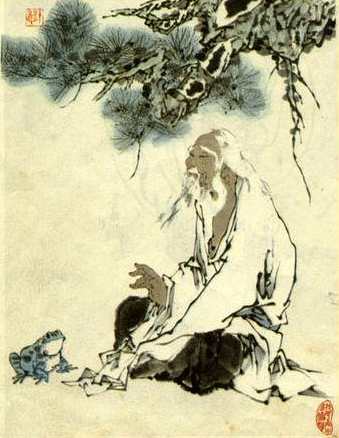
The Perils of Overextension: A Taoist Reflection
Chuang Tzu's poignant observation, "Open the senses, multiply concerns — and we are doomed before we are halfway done," serves as a profound reminder of the dangers inherent in overextending ourselves. In a world that constantly demands our attention and engagement, we often find ourselves overwhelmed by the multitude of stimuli and responsibilities that vie for our focus. This quote invites us to consider the consequences of scattering our energies too widely, suggesting that such fragmentation can lead to a sense of futility and exhaustion.
As we navigate the complexities of modern life, the wisdom of Chuang Tzu resonates deeply. The act of opening our senses to the myriad experiences around us can be both enriching and debilitating. When we multiply our concerns, we risk losing sight of what truly matters, becoming ensnared in a web of distractions that ultimately leads to our undoing. This teaching urges us to cultivate a sense of discernment, to prioritize our focus, and to recognize the value of simplicity in a world that often glorifies busyness.
The image / the metaphor
Chuang Tzu's words evoke a vivid imagery of sensory overload, where the act of opening one's senses is not merely an invitation to experience the world but a potential pathway to chaos. The verbs "open" and "multiply" suggest an active engagement with life, yet they also imply a lack of restraint. The felt sense of being "doomed" before we are "halfway done" conveys a haunting urgency, as if to say that the more we stretch ourselves, the closer we come to a breaking point. This imagery encapsulates the tension between the richness of experience and the peril of overcommitment.
Diving deeper into the metaphor, we can see that Chuang Tzu is not merely warning against the dangers of distraction; he is also highlighting the importance of focus and intention. The act of multiplying concerns can be likened to a garden overrun with weeds, where the beauty of the flowers is obscured by the chaos of unchecked growth. In this sense, the quote serves as a call to cultivate a mindful approach to our engagements, encouraging us to prune away the excess in order to nurture what is essential.
In the speaker's tradition
Chuang Tzu's insights are deeply rooted in the Taoist tradition, which emphasizes the importance of harmony, balance, and the natural flow of life. Concepts such as wu wei, or "non-action," resonate with the idea that one should not force or overextend oneself but rather align with the natural rhythms of existence. This philosophy invites us to recognize that true fulfillment arises not from the relentless pursuit of external concerns but from an inner stillness that allows us to respond to life with clarity and grace.
In the Zhuangzi, the text attributed to Chuang Tzu, we find numerous parables that illustrate the folly of overexertion and the wisdom of simplicity. For instance, the story of the "Useless Tree" teaches us that what may seem unproductive or irrelevant can hold immense value when viewed through the lens of naturalness and acceptance. This perspective encourages us to embrace our limitations and to find strength in simplicity rather than in the relentless pursuit of more.
Living the teaching
Consider a modern scenario where this teaching might resonate: a professional caught in the whirlwind of deadlines, meetings, and endless notifications. In the quest to excel, they may find themselves stretched thin, juggling multiple projects while feeling increasingly overwhelmed. The wisdom of Chuang Tzu serves as a gentle reminder to step back, to assess which tasks truly align with their core values and goals, and to prioritize those over the noise of lesser concerns. By doing so, they can reclaim their focus and energy, ultimately leading to a more fulfilling and productive experience.
This teaching can also find application in personal relationships. Imagine a friendship strained by the demands of life, where both parties feel the weight of unspoken expectations and unfulfilled commitments. By embracing Chuang Tzu's insight, they might choose to simplify their interactions, focusing on quality over quantity. This could mean setting aside time for genuine connection, free from distractions, allowing their relationship to flourish in a more meaningful way. In both scenarios, the act of narrowing one's focus can lead to a deeper sense of fulfillment and connection.
A reflection
As we contemplate Chuang Tzu's profound words, we are invited to reflect on our own lives: What concerns have we multiplied that may be leading us toward exhaustion? In a world that often equates busyness with worth, how can we cultivate a sense of discernment that allows us to prioritize what truly matters? This contemplation encourages us to embrace simplicity and focus, inviting us to explore the richness of our experiences without becoming overwhelmed by the multitude of choices before us.



Join the BrightStar Community
Stay connected with daily inspiration, event announcements, and community wisdom